RU
RU UK
UK EN
EN


Ultrasonic facial skin cleansing (ultrasonic peeling, ultrasound peeling)
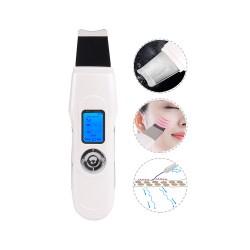
This is a hardware procedure for cleansing the skin of excess sebum and impurities, removing dead skin cells of the epidermis and eliminating comedones.
This method began to be used in cosmetology in the second half of the twentieth century.
Compared to other methods of facial cleansing (mechanical, vacuum), ultrasound peeling has a smaller depth of impact, but is completely painless, does not irritate, and does not injure the skin.
The advantages of ultrasonic cleaning include its versatility - it can be used even on the most sensitive skin, regardless of its type.
Mechanism of action
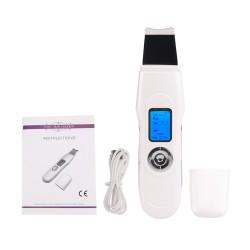
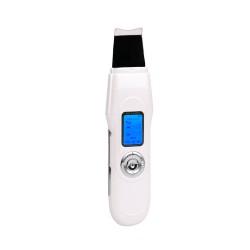
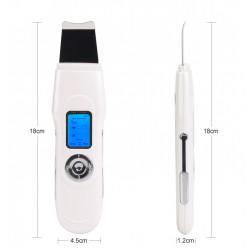
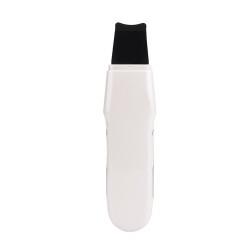
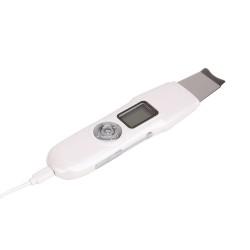
The cleansing effect is based on high-frequency vibrations – ultrasonic waves emitted by a special metal plate (“spatula”) exert variable acoustic pressure on the liquid medium applied to the skin; “microjets” appear in it, weakening the bonds between dying horn cells located on the surface of the skin, ensuring their easy removal .
(Contrary to popular belief, the “cavitation” effect of ultrasound does not appear during this procedure, since the intensity of all ultrasound devices in ultrasonic cleaning mode does not exceed 0.1-0.2 W/cm2, and the cavitation effect begins to occur at 3 W /cm2. Do not confuse an ultrasonic “spatula” with an ultrasonic scalpel.)
In addition to the direct cleansing effect, ultrasonic waves also have other effects characteristic of ultrasound therapy: they perform a “micromassage” and moisturizing the skin, activate redox processes in it, promote the production of elastin and collagen, accelerate the regeneration (renewal) of the skin.
Technique of the procedure
- Before starting ultrasonic peeling, make-up is removed; preparatory procedures, for example, “cold hydrogenation” are possible.
- The skin is intensively moisturized or a gel is applied (since the cleansing effect is only possible in a liquid medium) and the cosmetologist moves with an ultrasonic “spatula” over the skin, placing the working part of the tool at an angle of 35-45°; to the skin.
- The procedure ends with a light massage. It is possible to use various creams and masks.
- Average duration of the procedure (including preparatory and final stages) – 40-90 minutes (of which direct exposure to ultrasound is about 15 minutes).
- The procedure can be performed as often as necessary.
Possible complications
Local “burns” from exposure to an ultrasonic emitter are possible only if the procedure technology is violated and the device is malfunctioning.
Expected result
- reduction of existing local inflammatory phenomena;
- improving skin color
- increasing its elasticity;
- pore cleansing
Indications
- comedones (blackheads);
- dull complexion;
- swelling and local inflammation;
- increased oily skin;
- acne;
- seborrhea;
- enlarged and clogged pores;
- fading skin
- reduced skin turgor and tone.
Contraindications
- acne in the acute stage;
- pregnancy;
- manifestations of skin diseases in areas of exposure;
- tumors;
- after implantation of “golden threads”;
- acute infectious diseases;
- damage to the skin at the sites of exposure;
- severe forms of hypertension, coronary heart disease;
- arrhythmias (heart rhythm disturbances) of a paroxysmal nature (paroxysmal tachycardia, atrial fibrillation, group extrasystole)
- circulatory failure over II B degree
- acute thrombophlebitis;
- severe endocrine diseases;
- increased temperature;
- bronchial asthma;
- epilepsy;
- neuralgia, facial paralysis;
- impaired skin sensitivity in the affected area.
01/07/2018